Start Building Your Career Before Graduation, Dr. Frimpong Tells ATU Students
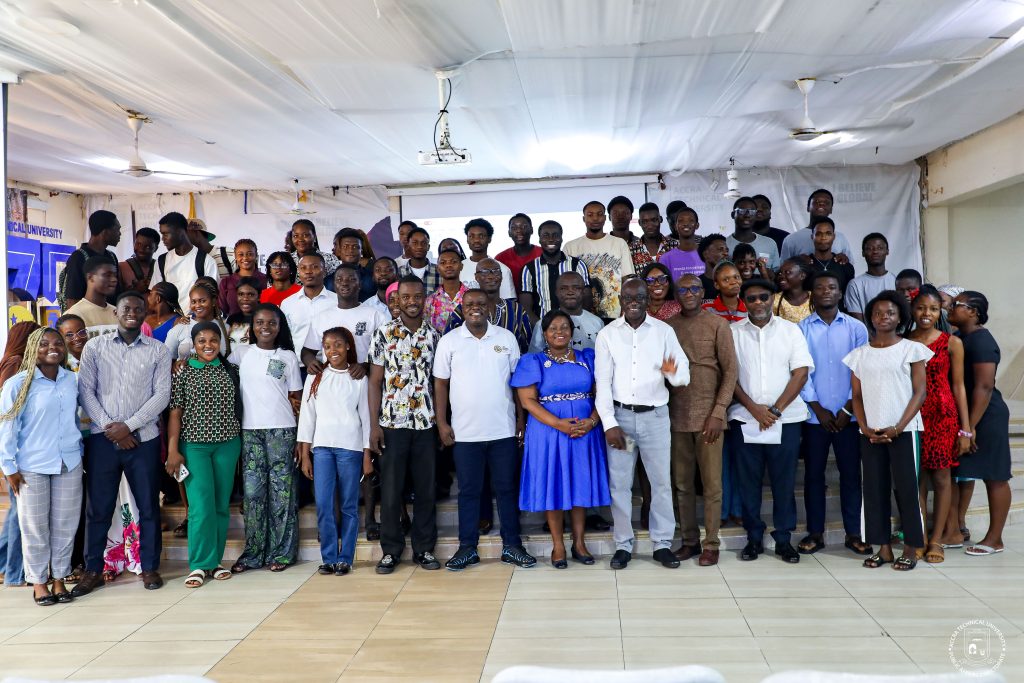
Waiting until graduation to prepare for the job market may be too late, as technology continues to change the skills employers expect from young graduates. Dr. Francis Boateng Frimpong, a Senior Lecturer at the University of East London, has encouraged students at Accra Technical University (ATU) to start building the skills, experience and professional connections they will need for work while still in school. He made the call during a seminar organised by the Directorate of International Programmes and Institutional Cooperation (DIPIC) on Tuesday, September 15, 2026. The seminar gave students an opportunity to look beyond their academic qualifications and think about how Artificial Intelligence (AI), automation and other digital technologies are changing jobs and workplaces. In his opening remarks, the Director of Directorate of International Programs and Institutional Cooperation (DIPIC), Prof. Peter Arhenful, said students need to understand these changes early enough to make informed decisions about their careers. He said the University’s responsibility goes beyond providing academic knowledge. Students also need opportunities to understand what is happening in industry and what will be expected of them when they enter the workplace. Taking the conversation further, Dr. Frimpong challenged students to think about their career goals and what they are doing now to achieve them. He drew attention to youth unemployment and the gap that can sometimes exist between having an academic qualification and meeting the expectations of employers. Practical experience and other workplace skills, he explained, can help students make that transition. The rise of AI, automation, robotics and digital technologies also means that some jobs and the way people work will continue to change. He encouraged students to remain open to learning and develop skills that will allow them to adapt as the workplace evolves. Dr. Frimpong also stressed the value of experience. He encouraged students to use internships, volunteering, and practical projects to gain some exposure to the workplace before graduation. Building professional networks was another important part of the conversation. He urged students to connect with people who can expose them to new ideas and opportunities while developing a positive attitude towards work, learning and teamwork. He described these qualities through an Employability Formula, knowledge, skills, experience, networks, and a positive attitude. Participants and the general public can download news gallary via https://directorateofpublicaffairs-atu89.pixieset.com/startbuildingyourcareerbeforegraduationdrfrimpongtellsatustudents/
Faculty of Built Environment Calls for New Approach to Flood Resilience
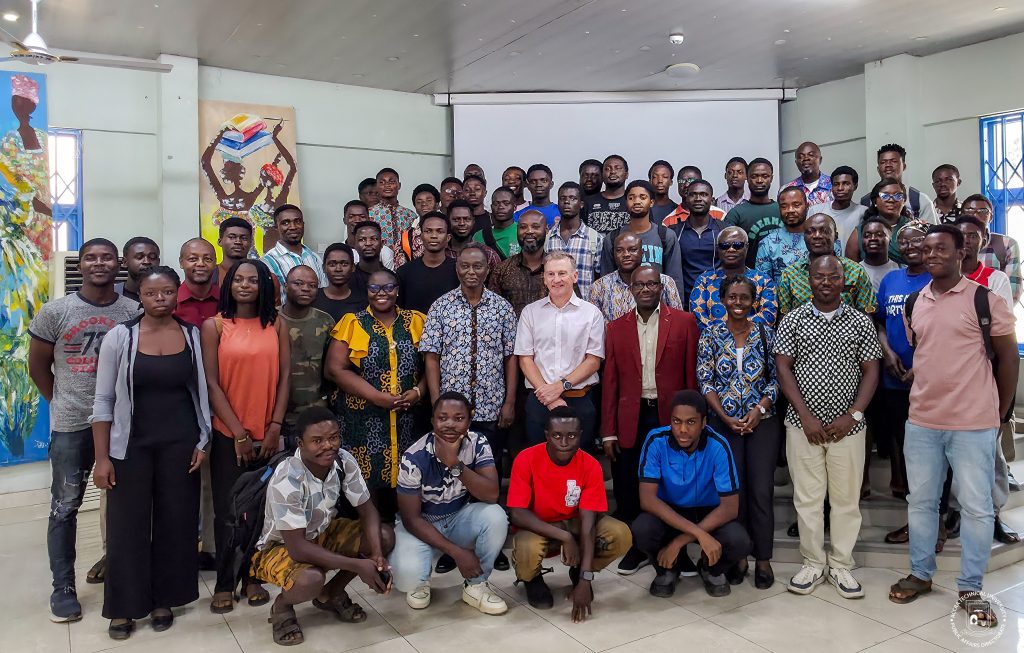
The Faculty of Built Environment at Accra Technical University (ATU) has called for more practical and innovative approaches to building communities that can better prepare for and recover from flooding. The call came during a public lecture on “Building Resilient Communities: Lessons from the UK Flood and Coastal Resilience Innovation Programme,” which brought students and faculty together to learn from approaches being tested in the United Kingdom. The programme was held on 15th September 2026 at the University’s Akwaaba Lodge. The Dean of the Faculty of Built Environment, Surv. Dr. Mark Brookman, said in his welcoming address that flooding requires closer attention to the challenges facing communities and the practical solutions that can make them more resilient. He stressed the need to look beyond physical infrastructure and consider how communities themselves can contribute to solutions. He said building resilience also requires stronger collaboration among researchers, authorities and communities, with local knowledge helping to shape responses that reflect the realities on the ground. The Faculty Research Representative, Surv. Roger Danladi added that rapid urbanisation and flooding continue to put pressure on communities and infrastructure. He said the Faculty has an important role in developing practical, innovative and sustainable solutions through research, teaching and professional practice. He also encouraged students to use their training to think differently about these challenges and develop solutions that respond to real community needs. Delivering the main lecture, Professor David Proverbs revealed the UK has continued to experience growing flood risks despite significant investment in flood protection. He pointed to a recent national assessment which estimates that about 6.3 million homes are at risk of flooding in the UK, an increase of more than one million from the previous assessment. This, he said, has created a need for new ways of thinking about flood resilience. Professor David shared lessons from the UK’s Flood and Coastal Resilience Innovation Programme, a £200 million initiative supporting 25 projects across the country. Drawing on the FAIR Project, he explained that effective flood resilience goes beyond physical infrastructure. Communities must also be involved in identifying risks and developing solutions. The project brings residents together with local authorities, researchers and other organisations. It uses local knowledge alongside measures such as improved flood warnings, smart monitoring and property-level protection. He added that the experience has also shown the importance of trust, local leadership and strong relationships within communities. Rather than simply informing residents about decisions, communities are involved from the beginning and help shape solutions that reflect their circumstances. The lecture offered students and faculty practical lessons on how research, technology and community knowledge can work together in addressing flood risks, while opening further discussion on how these approaches could be adapted to Ghana’s own communities. Download event pictures at https://directorateofpublicaffairs-atu89.pixieset.com/facultyofbuiltenvironmentcallsfornewapproachtofloodresilience/
Civil Engineering Students to Benefit from New China Partnership
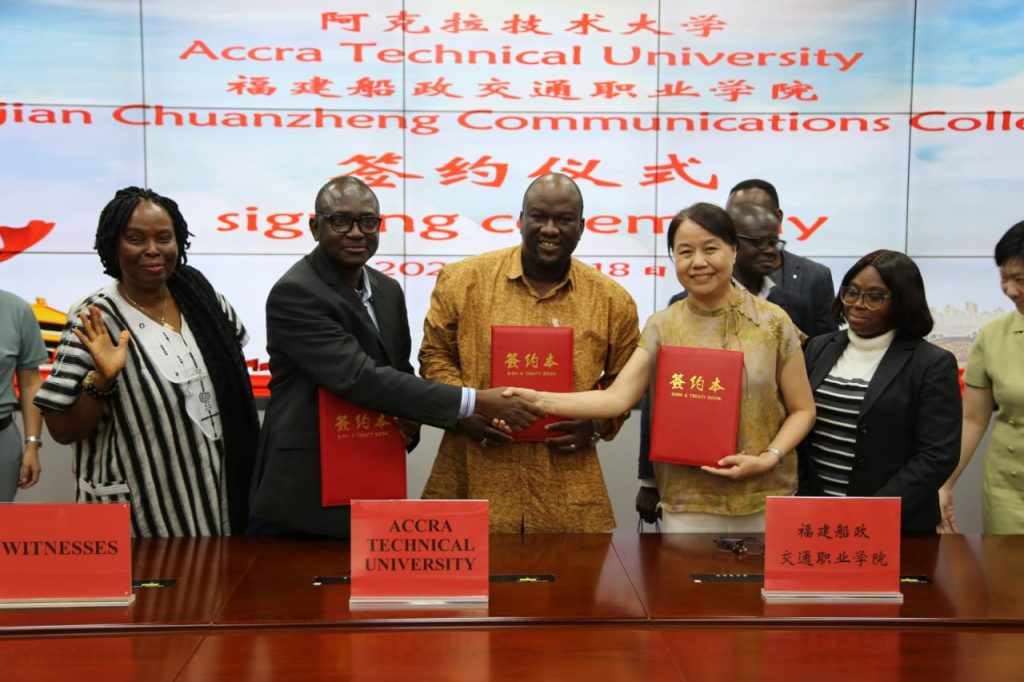
A new Memorandum of Understanding (MoU) has been signed between Accra Technical University (ATU) and Fujian Chuanzheng Communications College in China, opening a pathway for ATU Civil Engineering students to complete part of their studies in Fuzhou. Signed on 18 September 2026, in China, the agreement will support the development of a 2+1 transnational education programme for HND Civil Engineering students. Under the proposed arrangement, students will study for two years at ATU in Ghana before completing their final year at Fujian Chuanzheng Communications College. Twenty-five ATU students are expected to form the first cohort. Preparations will begin in December 2026 with Chinese-language training to prepare the students for their studies and stay in China. Fujian Chuanzheng Communications College has also committed to providing tuition-free study opportunities for the 25 ATU students who will participate in the programme. The agreement follows more than a year of engagement between the two institutions. This included virtual meetings and consultations facilitated through Ghana’s technical and vocational education and training authorities. During the visit to Fuzhou, the ATU delegation toured the College’s laboratories, workshops and practical training facilities. Representatives from the Ministry of Education, Ghana TVET Service and the Commission for Technical and Vocational Education and Training (CTVET) were among the Ghanaian officials who witnessed the signing. The partnership forms part of ATU’s continued effort to expand learning opportunities available to its students through international collaboration. Beyond studying in another country, participating students will gain practical exposure, experience a different learning environment and interact with another culture.Fujian Chuanzheng Communications College is a public higher vocational institution located in Fuzhou, Fujian Province, China. Its history dates back to 1866, when its predecessor, the Foochow Shipbuilding Institution, was established as China’s first state-run higher industrial institution in modern history. The College has since developed a long tradition of technical and vocational education, with strong links to transportation and industry. Today, its training covers areas including maritime studies, transportation infrastructure, automotive technology, aviation, rail transport, mechanical and intelligent manufacturing, information technology and smart transportation. The College is also among China’s first group of National Model Higher Vocational Colleges.
ARCATU 2026 Opens Conversations on Research, AI and Development. ATU brings researchers, industry and government together to explore practical solutions.
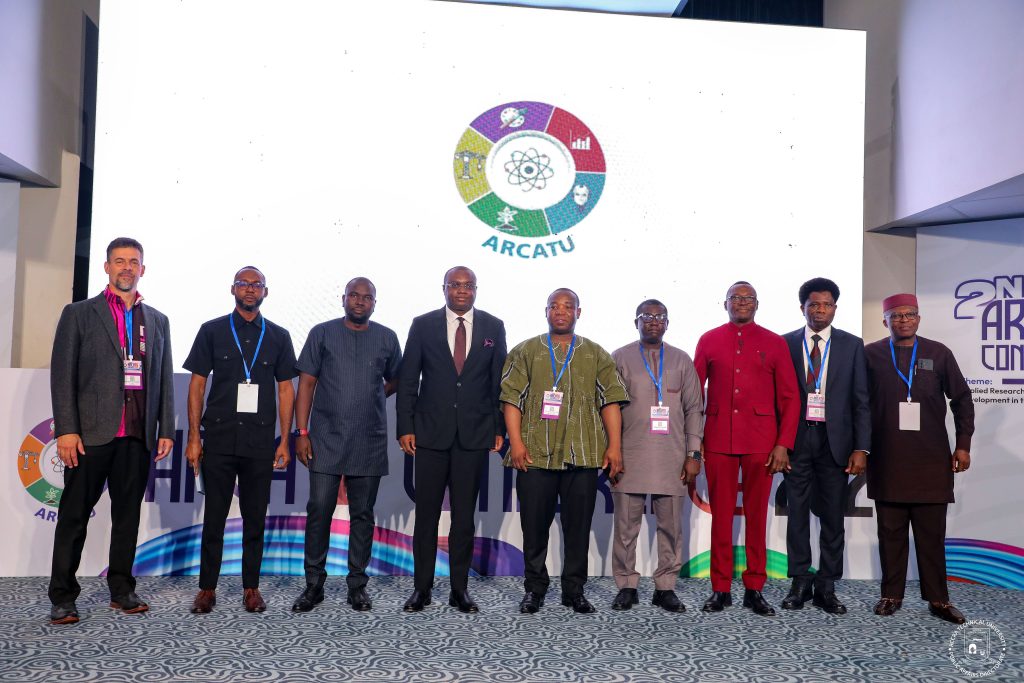
Conference participants and general public can download conference images via https://directorateofpublicaffairs-atu89.pixieset.com/arcatu2026opensconversationsonresearchaianddevelopmentday1/ Researchers, policymakers, industry leaders and students have gathered at Accra Technical University for the second edition of the University’s Applied Research Conference.Known as ARCATU 2026, the conference provides a platform for participants to share research, build partnerships and explore practical responses to Ghana’s development needs.This year’s conference is being held under the theme, “Applied Research and Innovation for Sustainable and Resilient Development in an Era of Artificial Intelligence.” It attracted 331 submissions, including 138 from international participants. A total of 250 papers are being presented in parallel sessions covering engineering, science, urban sustainability, applied arts, design, communication, business and entrepreneurship. Opening the conference on September 16, the Pro Vice-Chancellor, Prof. Felix Kutsanedzie, said applied research was central to the mandate of technical universities. He explained that institutions such as ATU were expected to develop practical knowledge, train skilled people and contribute to the growth of industry and the economy. Prof. Kutsanedzie said the conference reflected the University’s effort to connect researchers with industry practitioners, policymakers, development partners and students. He noted that new technologies were changing education, healthcare, research, communication and the workplace. AI was already being used in many of these areas, with further opportunities yet to be explored. He encouraged participants to use the conference to share their research experiences, identify gaps and develop partnerships that could move promising ideas forward. Building AI with local knowledgeThe Director-General of the Ghana Tertiary Education Commission, Prof. Ahmed Jinapor, encouraged universities to prepare students and researchers for the changes being introduced by AI. He compared the growth of AI to the arrival of computers, which changed how people worked and accessed information. Prof. Jinapor said AI could improve research, speed up discovery and support the development of solutions to complex national problems.He urged Ghana to contribute to the development of AI instead of depending mainly on technologies created elsewhere. This, he explained, would require more Ghanaian and African data to train systems that understand local languages, culture and conditions.He also encouraged researchers to bring indigenous knowledge into AI development. He identified fashion, manufacturing, building technology, the arts, traditional medicine and other applied sciences as areas with useful local knowledge. Prof. Jinapor further stressed the need for clear ethical and regulatory systems to guide the responsible development and use of AI.Moving research into practiceThe Chief of Staff, Dr Julius Debrah, was represented by the Presidential Adviser on National Resilience and Emergency Preparedness, Mr Ernest Brogya Genfi.In his address, Dr Debrah said Ghana had many ideas but needed better systems for turning research and innovation into practical solutions.He said applied research should begin with a clear need and lead to a solution that could be tested, improved and used.He encouraged universities, government and industry to work together from the early stages of research. This would make findings more relevant and reduce the gap between discovery and application. He also called for research findings to be presented in clear language so that policymakers could understand the evidence and use it in making decisions. On AI, he emphasised the need to protect personal information, respect citizens’ rights and consider local languages and culture.Preparing students for an AI-driven futureThe Minister for Communication, Digital Technology and Innovations, Mr Samuel Nartey George, was represented by the Ministry’s Director of Innovation, Mr Emmanuel Ofori.Mr Ofori said universities had an important responsibility to prepare Ghana for the changes being created by AI. He described AI as a tool that should support human decisions. He encouraged universities to give students practical problems that required critical thinking and the responsible use of technology.He also called for curriculum reforms to help students develop industry-relevant skills in areas such as data science and AI strategy.Mr. Ofori said Ghana’s National AI Strategy placed strong emphasis on research and education. A national framework with clear targets was also being developed to guide its implementation.He challenged participants to identify ideas that could be tested in real working environments, attract support from industry and investors, and help government improve public services.Through ARCATU, the University is creating space for research to move beyond presentation and contribute to practical change. The conversations and partnerships formed during the conference are expected to support further work in applied research, innovation and national development. Conference participants and general public can download conference images via https://directorateofpublicaffairs-atu89.pixieset.com/arcatu2026opensconversationsonresearchaianddevelopmentday1/
Vice-Chancellor Meets Students Pursuing Their Degrees in China
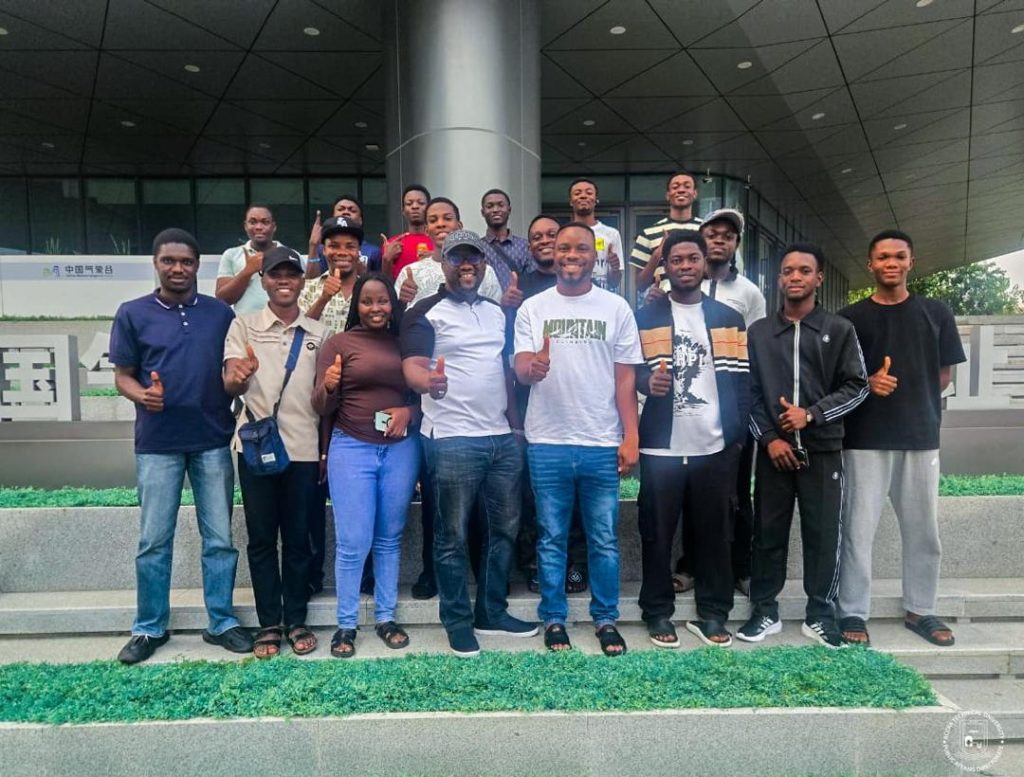
Fourteen students of Accra Technical University (ATU) have taken their studies beyond Ghana through the University’s Two-Plus-Two Programme. They are currently continuing their bachelor’s degree programmes at the Nanjing University of Information Science and Technology (NUIST) in China. During a recent visit to China, the Vice-Chancellor of ATU, Prof. Engr. Amevi Acakpovi, visited the students at NUIST to learn about their academic progress and general well-being. He interacted with them about their studies and experiences in China, offered guidance and encouraged them to remain focused and make the most of the academic and cultural opportunities available to them. The students are pursuing bachelor’s degree programmes in Electrical and Electronic Engineering and Computer Science. Under the Two-Plus-Two arrangement, qualified students complete the first two years of their studies at ATU before proceeding to NUIST for the remaining two years. The programme is being implemented under a partnership signed between ATU and NUIST in 2023 to support students’ academic progression and provide them with international exposure. This year, 14 ATU students qualified and were successfully admitted and registered at NUIST. Prof. Acakpovi told the students that their experiences would contribute significantly to the future development of the programme. He encouraged them to represent ATU and Ghana well and demonstrate to other students what could be achieved through the partnership. He also noted that the presence of ATU students at NUIST should give prospective students and parents confidence in the programme. Their successful progression demonstrates that students can begin their bachelor’s degree education at ATU and continue the remaining part of their studies in China. The University is working to create greater awareness of the opportunity among prospective students and parents while strengthening its partnership with NUIST. For Prof. Acakpovi, meeting the 14 students in China was also an opportunity to see the Two-Plus-Two Programme in action, with ATU students expanding their knowledge and gaining valuable experiences beyond their home campus in Accra.
ARCATU CONFERENCE 2026 IS HERE! 🎉

Accra Technical University invites all staff, students, and the general public to the 2nd Applied Research Conference of Accra Technical University (ARCATU 2026). 📅 Wed., 16th – Thur., 17th Sept. 2026📍 ATU Main Campus (Opening Ceremony at Ghana Shippers Authority)⏰ 9:00 AM🎯 Theme: Applied Research & Innovation for Sustainable and Resilient Development in the Era of AI. Last year was amazing, this year will be even bigger and better. This is OUR International Conference — let’s build and sustain it together!
ATU–Saint Louis University Partnership Signed and Sealed
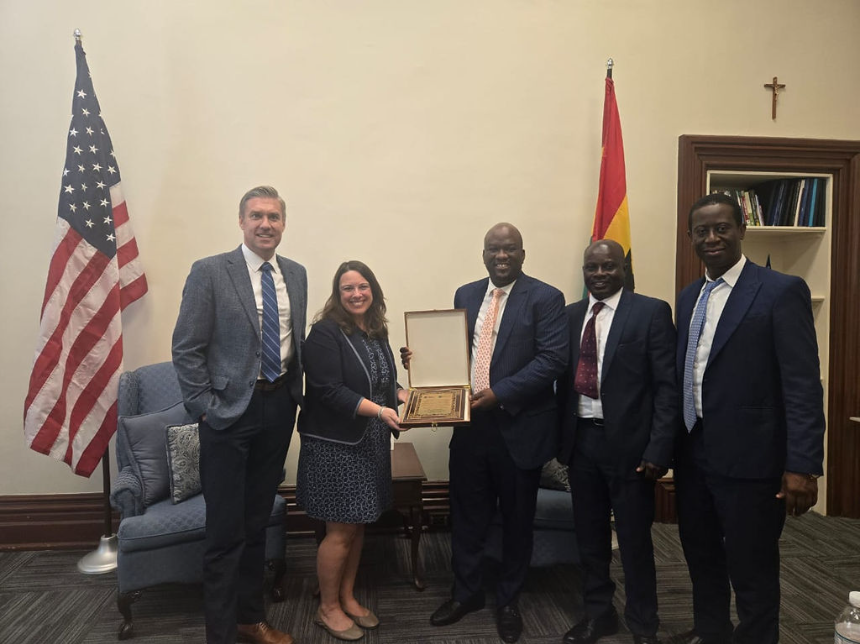
Following months of engagement and the rollout of our 1+1 MSc in Applied AI and Decision Analytics, the partnership between Accra Technical University (ATU) and Saint Louis University (SLU), USA, has now been officially signed and sealed. The agreement was formalised on 9 September 2026 during a visit to Saint Louis University by a delegation from Accra Technical University, led by the Vice-Chancellor, Prof. Engr. Amevi Acakpovi. The ATU delegation was received by Kathy E. Johnson, Ph.D., Executive Vice President and Provost of Saint Louis University. The signing strengthens the relationship between the two universities and provides a clear framework for the joint academic programmes and other areas of collaboration being developed. A key component of the partnership is the 1+1 MSc in Applied AI and Decision Analytics, which allows students to begin their studies at ATU and continue at Saint Louis University. Under the arrangement, students who successfully complete the programme requirements will receive two certificates—one from Accra Technical University and the other from Saint Louis University. Beyond the current programme, discussions between the two institutions centred on expanding the collaboration to include other academic programmes. This development could provide more ATU students with opportunities to benefit from international learning experiences and earn qualifications from both institutions. The partnership also provides opportunities for student and faculty exchanges, joint research and other academic activities, thereby strengthening the sharing of knowledge and expertise between ATU and SLU. Visitors can download news gallery from https://publicaffairsdirectorate11.pixieset.com/atuandsaintlouisuniversitypartnershipsealed/
ATU Launches Digital Skills Initiative with Silvadew Technologies
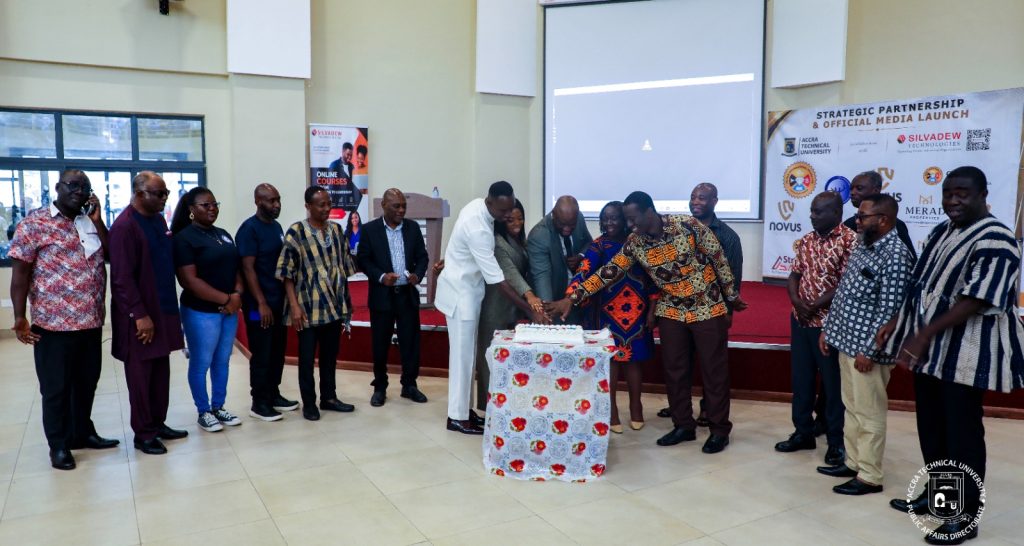
Accra Technical University (ATU), in collaboration with Silvadew Technologies, has launched a digital skills initiative to give students access to professional training and industry-recognised certifications alongside their academic studies. The initiative was launched on Thursday, 3 September 2026, at the University’s Lecture Theatre Auditorium, bringing together students, University officials and industry experts. Through the programme, students will have access to short courses and professional certification opportunities in digital and emerging technology areas. The initiative also seeks to help students build practical and entrepreneurial skills that can prepare them for employment and other opportunities within the digital economy. Speaking at the opening of the programme the Head of the Department of Computer Science, Dr. Joseph Dadzie, encouraged students to take advantage of the certification programmes available to them. He thanked Silvadew Technologies for supporting the University’s efforts to expose students to professional training and opportunities within the technology industry. The Dean of the Faculty of Applied Sciences, Prof. Nana Yaw Asabere, said the initiative supports Pillar 4 of ATU’s Strategic Plan, which focuses on strengthening collaboration between the University and industry. He explained that the programme will make digital training and certification more accessible and affordable to students. He also encouraged them to develop ICT and entrepreneurial skills that can help them create opportunities for themselves after graduation. Launching the initiative, the Vice-Chancellor of ATU, Prof. Engr. Amevi Acakpovi, encouraged students to complement their academic qualifications with professional and entrepreneurial skills. He said that changes in technology and the workplace require graduates to continually develop new skills. He urged students to make good use of the short courses and certification opportunities available through the initiative, particularly those covering emerging technologies. The Chief Executive Officer of Silvadew Technologies, Mr. Kwame Ampong, gave students a practical demonstration of the Silvadew online learning platform. He took participants through how to access the platform, select training programmes and track their learning progress. He explained that students can follow individual learning pathways at their own pace, while the platform also provides corporate training programmes based on industry needs. The launch follows a Memorandum of Understanding signed between ATU and Silvadew Technologies on 20 July 2026. Under the agreement, Silvadew is working with the University to provide students with short professional courses, practical digital training and internationally recognised certifications to support their career development.
COUNTDOWN TO 2ND ARCATU CONFERENCE 2026
Get Pre-conference details and brochure on https://atu.edu.gh/arcatu/?p=1611
ATU, Abrantie College Launch HND Paramedical Trichology Programme
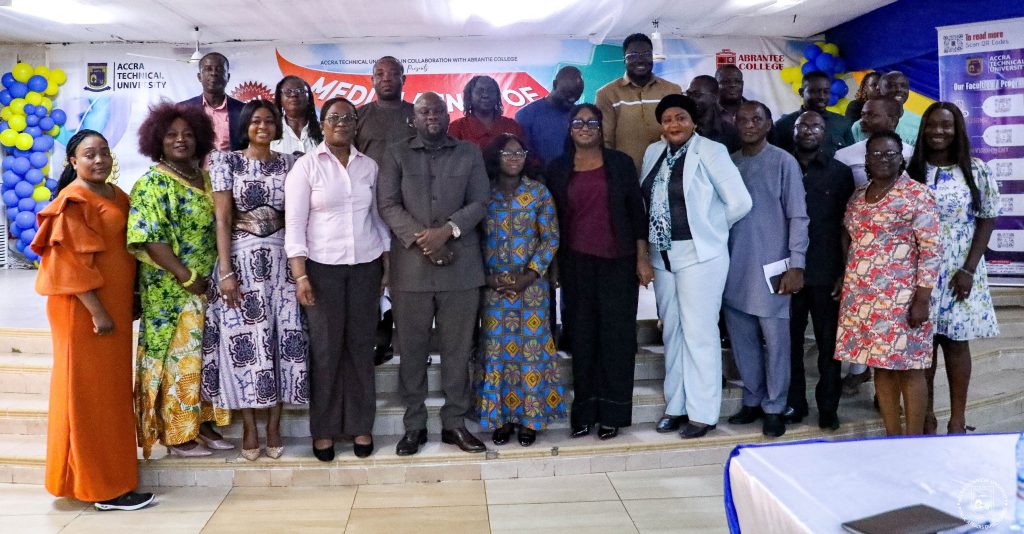
Accra Technical University (ATU), in partnership with Abrantie College, has launched a Higher National Diploma (HND) in Paramedical Trichology to provide professional training in hair and scalp care. The programme was launched on Thursday, 27 August 2026, at ATU. It is a three-year, Level 5 competency-based qualification developed with guidance from the Commission for Technical and Vocational Education and Training (CTVET) and the Beauty and Wellness Sector Skills Body. The programme combines scientific knowledge with practical training. Students will learn how to assess hair and scalp conditions, provide appropriate non-medical care and refer cases that require medical attention to qualified health professionals. It also creates a formal academic progression route for more than 8,000 cosmetologists and beauty practitioners who previously had limited opportunities to pursue higher education in their specialised field. Academic leaders, regulators, industry partners and beauty and wellness professionals attended the media launch to welcome the programme. The initiative is expected to help professionalise hair and scalp care and support Ghana’s ambition to become a leading centre for specialised beauty and wellness education in Africa. Strengthening academia-industry collaboration Speaking at the launch, the Vice-Chancellor of ATU, Prof. Amevi Acakpovi, said tertiary education must respond directly to the needs of industry and prepare students for available opportunities. He explained that the programme would provide a structured academic pathway for practitioners in hair and scalp care, which has largely depended on informal and short-term training. According to him, the partnership brings together ATU’s academic standards and quality assurance systems with Abrantie College’s practical experience in the beauty and wellness industry. Prof. Acakpovi also called on the Beauty and Wellness Sector Skills Body to work towards establishing a professional regulatory body within the next three years. He said this would help maintain ethical standards and ensure that practitioners have the required skills and competence. Practical Training and Industry Experience The Head of the Department of Fashion Design and Textiles, Dr. William Kwesi Senayah, said the programme would combine classroom teaching with extensive practical training. Students will learn with appropriate tools and equipment under experienced lecturers, while industry professionals will support specialised lessons and share current practices. Internships will also give students practical exposure in professional settings and prepare them for employment after graduation. Creating opportunities for practitioners The Head of Abrantie College, Mr. Brian Obempong, said the beauty and wellness industry had often been viewed as a field limited to lower-level qualifications. He noted that although Abrantie College had trained thousands of cosmetologists over the past decade, many practitioners did not have a clear route to advance academically. He described the partnership with ATU as an important step towards changing that situation. Mr. Obempong said the global hair and scalp care industry was valued at over $90 billion, while scalp conditions affected more than 60 per cent of adults. He indicated that graduates of the programme could work in research centres, specialised hair and scalp care facilities, private practices and other related settings. Government pledges support Speaking on behalf of the Deputy Minister of Education, Dr. Clement Abas Apaak, the Director of TVET, Ms. Rejoice Danquah, described the programme as an important contribution to national development. She said Technical and Vocational Education and Training plays a central role in promoting innovation, entrepreneurship and employment. Ms. Danquah reaffirmed the Ministry’s commitment to building a TVET system that allows learners to progress from one qualification level to another without reaching an educational dead end. She encouraged the pioneer students to uphold high professional standards, explaining that their performance would influence the development of similar specialised TVET programmes in Ghana. More specialised programmes underway Representing the Chairperson of the Beauty and Wellness Sector Skills Body, Dr. Grace Amey-Obeng, the Sector Secretary, Ms. Winnifred Dake, announced that additional specialised curricula had been developed. She identified the proposed programmes as Paramedical Aesthetics, Health and Wellness, and Beauty Products Manufacturing. Ms. Dake assured ATU management that the Sector Skills Body was working towards establishing a formal regulatory authority for the industry. She said the new qualifications would allow Ghanaian practitioners to receive world-class technical education locally and strengthen Ghana’s position as a destination for specialised beauty, wellness and hair-health training in Africa. Public can access news gallery through the link provided https://publicaffairsdirectorate11.pixieset.com/atuabrantiecollegelaunchhndparamedicaltrichologyprogramme/