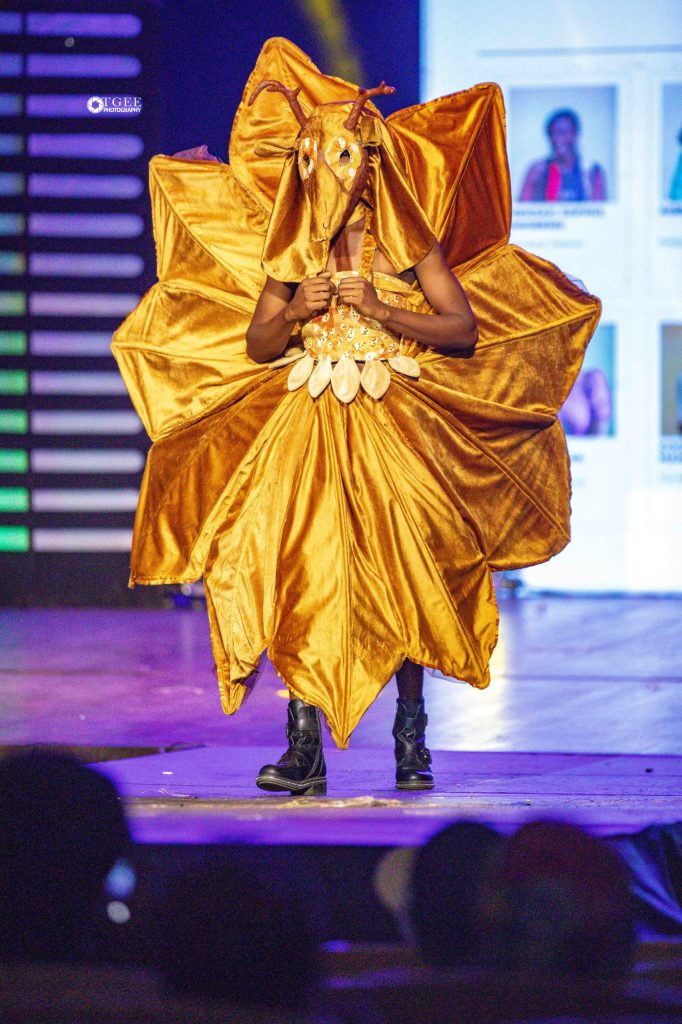
When models stepped onto the runway at the National Theatre dressed in striking camel-brown costumes, complete with sculpted antlers, deer-inspired masks and dramatic silhouettes, Sophia Odobeng Mensah was doing more than presenting clothes.
She was telling the story of the Aboakyer Festival through fashion.
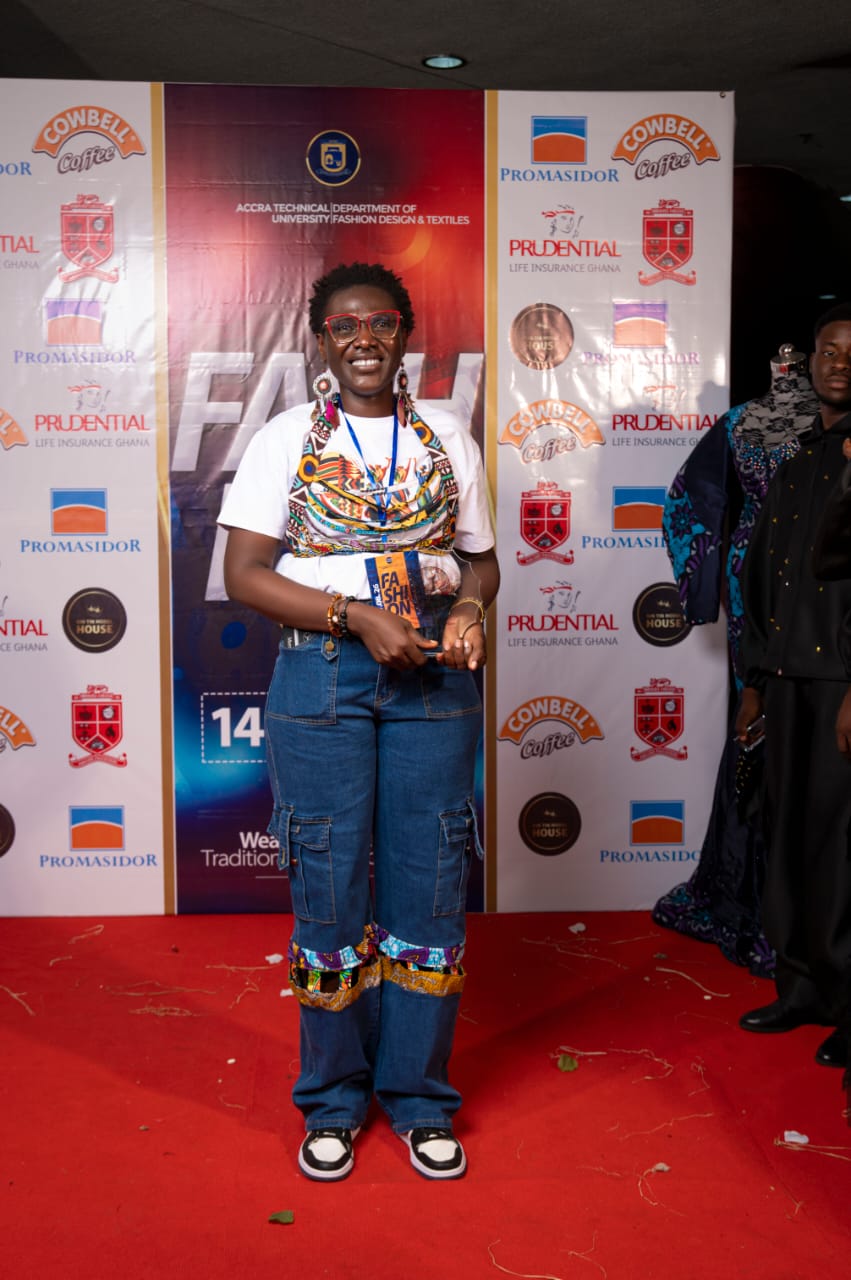
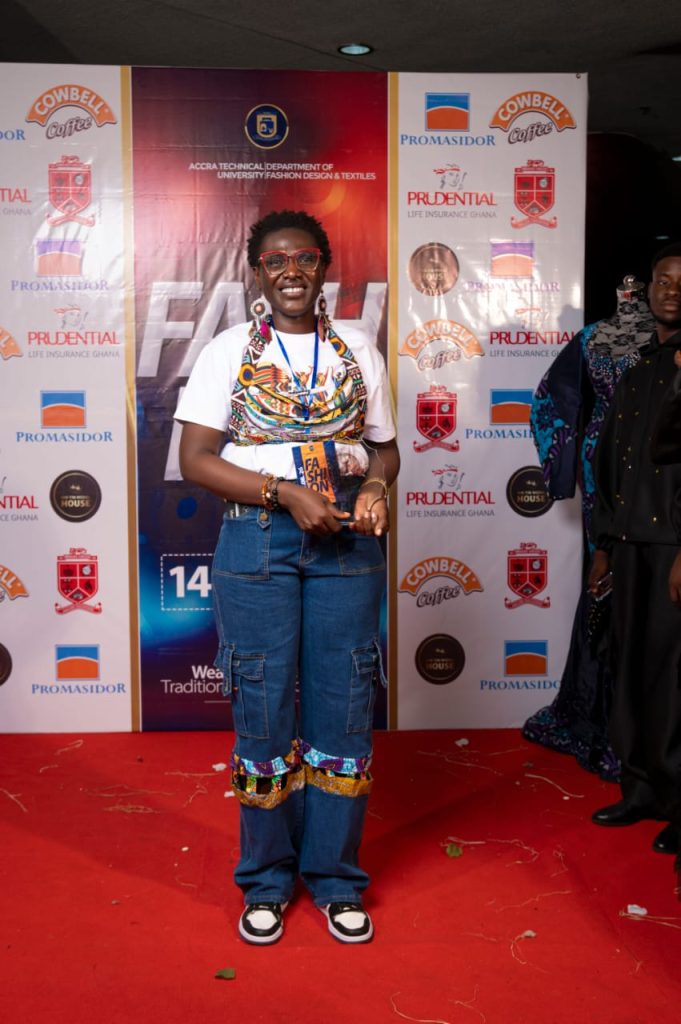
The Level 300 HND Fashion Design and Textiles student of Accra Technical University (ATU) emerged as the Overall Best Designer at the University’s Fashion Show held at the National Theatre on August 14, 2026.
Her collection stood out not only for its visual impact, but also for the cultural story behind the designs.
Working under the theme “Wear Your Culture: Tradition Meets Modernity,” Sophia turned to the Aboakyer Festival of the Effutu people of Winneba for inspiration, with the deer at the centre of her concept.
For Sophia, the choice was also personal. A native of Effutu, she drew from a cultural tradition she grew up identifying with, turning a familiar symbol of her heritage into the foundation of her final collection.
The deer offered much more than an interesting shape for a costume. Its place in Effutu history and tradition provided a cultural language from which an entire contemporary collection could be developed.
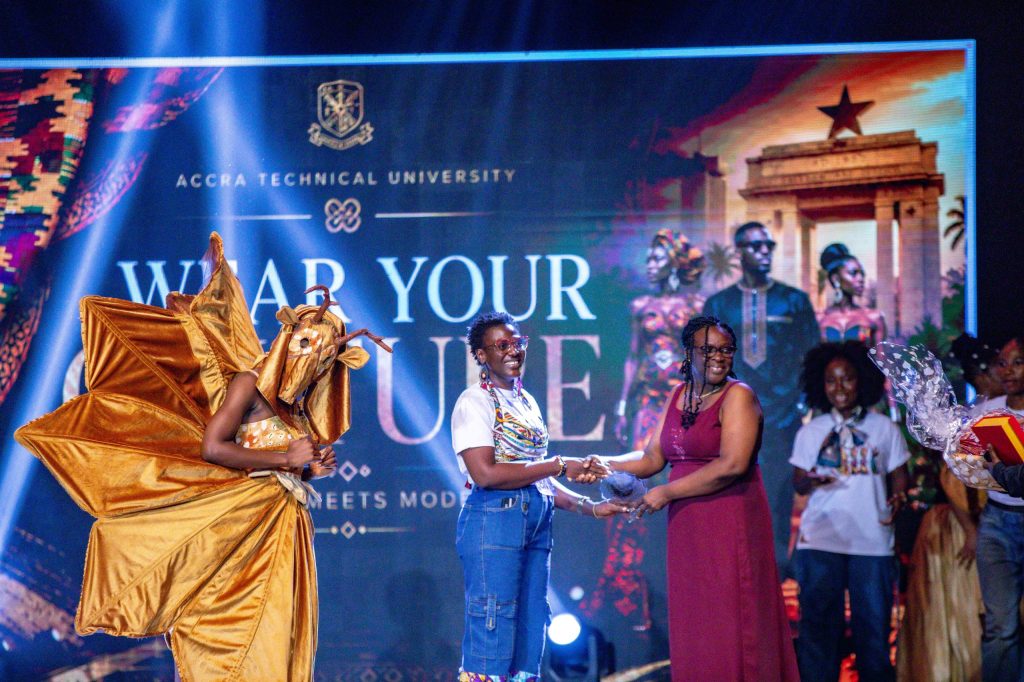
According to Effutu tradition, the deer became a substitute for human sacrifice to the deity Penkye Otu. Its capture consequently became central to the annual Aboakyer Festival and, over generations, the animal has come to represent values including courage, sacrifice, strength, unity, grace and cultural identity.
Sophia took these meanings from the festival grounds to the fashion runway.
A runway of Ghanaian stories
Sophia’s collection was part of a much bigger celebration of creativity and culture as graduating students of the Department of Fashion Design and Textiles presented their collections at the National Theatre.
The Fashion Show brought together students, University Management, faculty, industry players, families and fashion enthusiasts to witness the culmination of months of academic and practical work by the student designers.
Under “Wear Your Culture: Tradition Meets Modernity,” the runway became a meeting point between Ghana’s cultural heritage and contemporary fashion. Students drew inspiration from different aspects of culture and transformed their ideas into garments through fabric, colour, texture, construction and styling.
Speaking at the event, Head of the Department of Fashion Design and Textiles, Dr. (Mrs.) Emma Donkor, reiterated the importance of combining academic knowledge with creativity and practical skills in the training of fashion students.
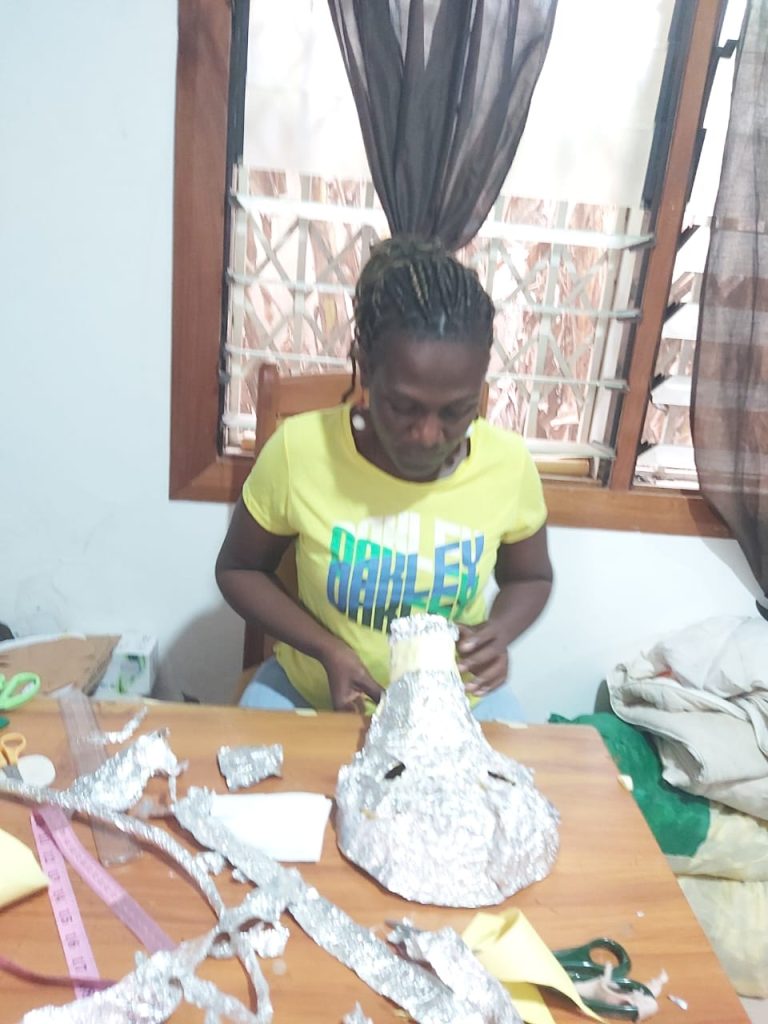
The event consequently provided more than an opportunity to display finished garments. It gave students a platform to demonstrate the processes of research, concept development, pattern making, garment construction, textile application, styling and presentation that demonstrate their training at ATU
It was among these varied interpretations of Ghanaian culture that Sophia’s Aboakyer-inspired collection emerged as the overall best.
When the deer becomes fashion
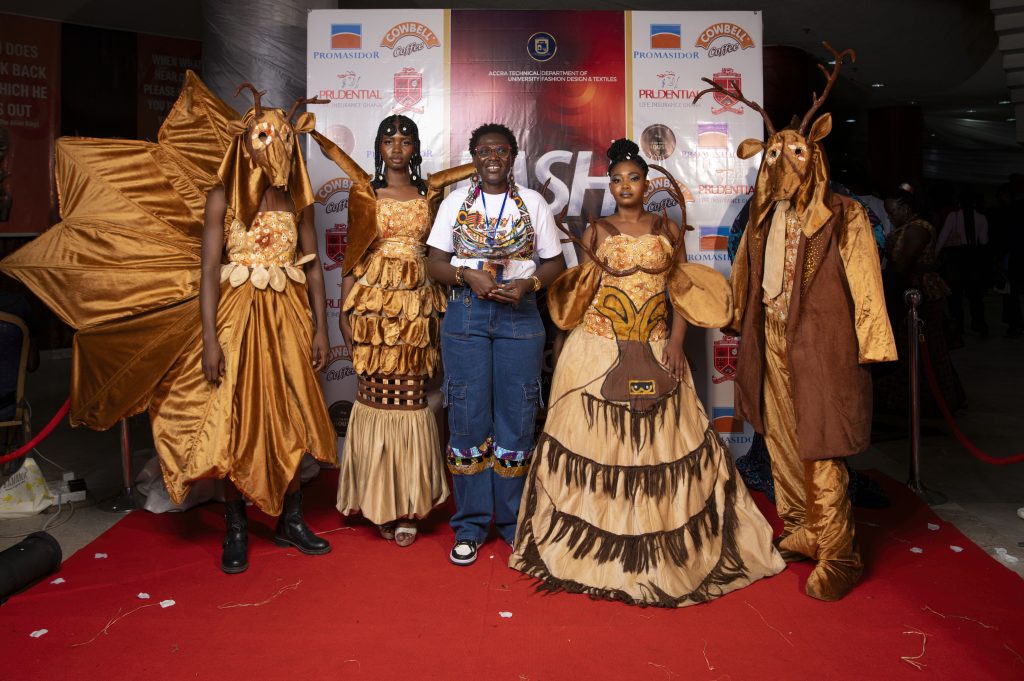
Sophia’s designs draw heavily on the physical characteristics of the deer. The dominant camel-brown, gold and earthy tones evoke both the animal’s natural colouring and its connection to the land.
But what makes the collection particularly interesting is that she did not simply place the image of a deer on a garment.
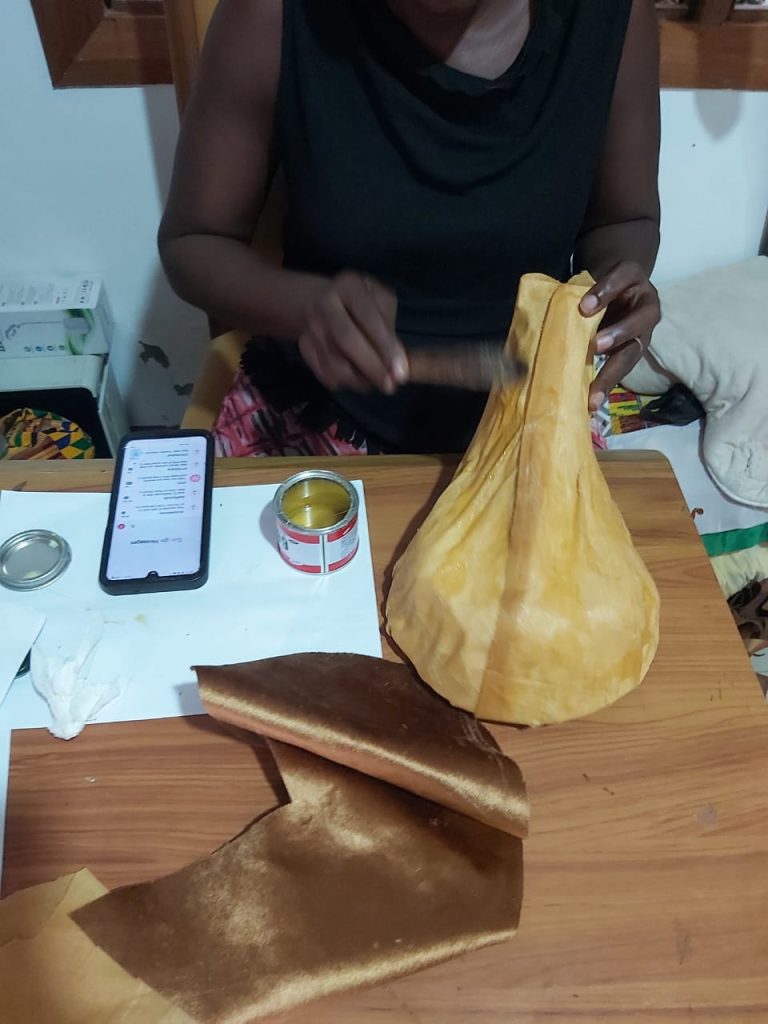
She deconstructed the animal into design elements.
The antlers become some of the collection’s most recognisable features. They rise from masks and extend across garments, transforming the natural form of the deer into dramatic fashion details.
The masks take the interpretation even further. By partially transforming the models into the animal that inspired the collection, Sophia moves the presentation beyond clothing into visual storytelling. For a moment on the runway, the models do not merely wear a story about Aboakyer; they appear to embody one of its most important symbols.
The silhouettes are equally striking.
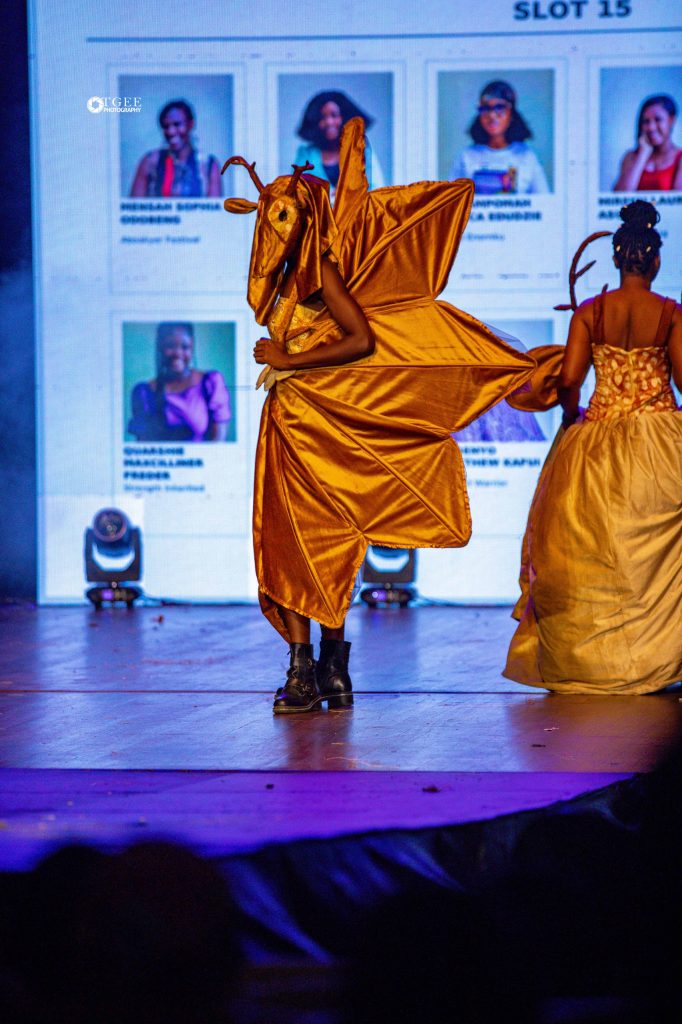
One garment expands dramatically behind the wearer through a series of large, angular folds. From the front, the structure creates an almost flower-like frame around the body. Viewed from the side, however, the individual sections become more visible, giving the garment a sculptural quality.
Combined with the elongated deer mask and branching antlers, the design exaggerates the form and presence of the animal while still maintaining the structure of a contemporary fashion piece.
Another garment takes a different approach. A full-length dress uses the female form as a canvas for interpreting the deer. Brown detailing traces sweeping antler-like forms across the bodice while lighter earthy fabrics dominate the skirt.
The different pieces therefore do not simply repeat the same deer costume. They demonstrate how a single source of inspiration can be interpreted through different silhouettes, textures, shapes and decorative techniques.
And underneath the theatrical presentation are skills central to fashion education: concept development, research, fabric selection, colour application, pattern development, construction, detailing and the ability to translate an abstract idea into a finished garment.
Where tradition meets modernity
That is perhaps where Sophia’s collection most closely captures the Fashion Show’s theme.
Sophia’s collection makes an important statement about preserving culture: preservation does not always mean leaving culture untouched. It can also mean giving its stories new forms through which they can survive and remain relevant.
Her achievement also speaks to the purpose of ATU’s Fashion Design and Textiles programme.
Fashion education goes beyond learning how to sew a garment. Before a collection reaches the runway, an idea has to be researched, developed, sketched, translated into patterns, constructed, fitted, corrected, styled and ultimately presented.
Sophia’s journey from an idea rooted in Aboakyer to becoming the Overall Best Designer offers a glimpse of what that process can produce.
But for her, the National Theatre runway is only a beginning. Sophia hopes to turn the skills and creative confidence she has developed at ATU into a career that combines fashion, entrepreneurship and cultural promotion.
After ATU, my dream is to become a successful fashion designer and entrepreneur. I want to establish my own fashion brand, promote African culture through modern fashion, train young people, create jobs, and use my skills to make a positive impact in society,” she said.
Her ambition mirrors what her Aboakyer collection has already begun to demonstrate: that African culture can provide inspiration for contemporary fashion while creating opportunities for young designers to build businesses and livelihoods around their creativity.
For young people considering a future in fashion, Sophia’s story demonstrates the possibilities that emerge when natural creativity is supported by technical and academic training.
At ATU, students have the opportunity to develop beyond garment construction into designers capable of research, textile development, cultural storytelling, creative problem-solving and entrepreneurship.
For the next young person wondering whether an interest in clothes, drawing, textiles, colour or design can become something bigger, Sophia Odobeng Mensah’s journey provides an answer.