ATU’s Centre for Entrepreneurship and Incubation Services Receives CTVET Accreditation

Accra Technical University’s Centre for Entrepreneurship and Incubation Services (CEIS) has received accreditation from the Commission for Technical and Vocational Education and Training (CTVET) to provide skills training in selected areas. The accreditation allows the Centre to run Competency-Based Training in Agripreneurship, Welding and Fabrication Technology, and Computer Software Development. Under Agripreneurship, the training will also cover practical areas such as yoghurt production and the mango value chain. The accreditation strengthens the Centre’s efforts to provide practical and relevant skills training. It also gives CEIS the opportunity to extend its training activities to people in the informal sector who need skills to improve their work or build their businesses. The Head of CEIS, Prof. Ernest Christian Winful, who played an instrumental role in securing the accreditation, described the development as great news for the Centre and the University. He explained that the accreditation will allow CEIS to develop short courses that can lead to certification. This will create more opportunities for people, especially those in the informal sector, to receive practical training and gain recognised skills. Prof. Winful also believes that the Centre’s activities will help improve the visibility of Accra Technical University as CEIS reaches more people through entrepreneurship and skills training. About CEIS The Centre for Entrepreneurship and Incubation Services was established as part of Accra Technical University’s efforts to promote entrepreneurship, innovation and practical skills development. The Centre helps students develop entrepreneurial skills and provides support to turn promising ideas into sustainable businesses. It also creates opportunities for students to gain practical experience and develop solutions to real-world problems. CEIS is currently running the ACTIVATE Programme, a four-day entrepreneurship initiative that invites students from all faculties of the University to pitch their business ideas. Through the programme, promising student entrepreneurs stand the chance of receiving seed funding ranging from GH₵5,000 to GH₵500,000 to help develop and grow their business ideas. The ACTIVATE Programme forms part of the Centre’s broader effort to encourage entrepreneurship among students and provide practical support for ideas that have the potential to become viable businesses.
ATU Hosts Industry–Academia Lecture Forum to Advance Engineering Research and Practice
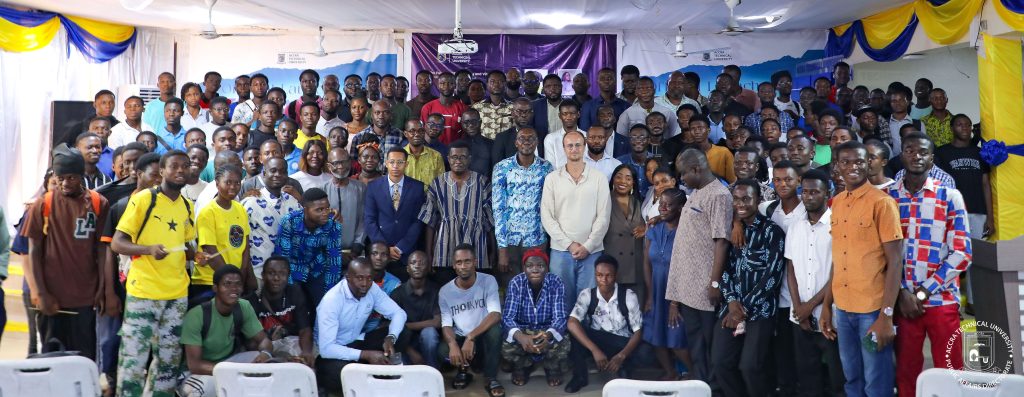
Engineering Experts and Researchers Converge at ATU Industry-Academia Forum ATU has hosted an Industry–Academia Lecture Forum aimed at strengthening collaboration between engineering research and industry practice. Held at the University Auditorium on Thursday, 7 May 2026, the forum brought together lecturers, industry professionals, researchers, and engineering students to discuss emerging trends in engineering and applied research. Speaking at the event, the Head of the Civil Engineering Department, Ing Dr. Prodeo Yao Agbotui, said the forum was organised to help bridge the gap between academic research and practical industry solutions. Chief Executive Officer of Viva Fiberglass, Ivan Romanov, in his keynote address, stressed the need for stronger collaboration between industry and academia to keep pace with rapid global technological advancement. Engineer Professor Charles K. Kankam also delivered a presentation on the structural properties of Glass Fibre Reinforced Polymer (GFRP) bars in concrete, highlighting their growing importance in modern construction. The forum featured a series of graduate research presentations on advanced concrete technology, reinforcement systems, and structural engineering. Participants also engaged in an interactive discussion session on the practical implications of the studies presented. President of the Institution of Engineering and Technology Ghana, Engineer Wonder Davor Salami, encouraged researchers to continue producing industry-driven studies capable of influencing engineering practice and innovation. In his closing remarks, Prof. Kankam commended the organisers and proposed that future Viva Fiberglass programmes be hosted at ATU, citing the successful organisation of the event. The forum formed part of ATU’s efforts to promote industry engagement, applied research, and practical engineering education. Access news gallery via https://atu-dpa.pixieset.com/atusindustryacademialectureforumonengineeringresearchandpractice/
This Is What Fashion Education Looks Like at ATU: Sophia’s Aboakyer-Inspired Collection Takes the Spotlight

When models stepped onto the runway at the National Theatre dressed in striking camel-brown costumes, complete with sculpted antlers, deer-inspired masks and dramatic silhouettes, Sophia Odobeng Mensah was doing more than presenting clothes. She was telling the story of the Aboakyer Festival through fashion. The Level 300 HND Fashion Design and Textiles student of Accra Technical University (ATU) emerged as the Overall Best Designer at the University’s Fashion Show held at the National Theatre on August 14, 2026. Her collection stood out not only for its visual impact, but also for the cultural story behind the designs. Working under the theme “Wear Your Culture: Tradition Meets Modernity,” Sophia turned to the Aboakyer Festival of the Effutu people of Winneba for inspiration, with the deer at the centre of her concept. For Sophia, the choice was also personal. A native of Effutu, she drew from a cultural tradition she grew up identifying with, turning a familiar symbol of her heritage into the foundation of her final collection. The deer offered much more than an interesting shape for a costume. Its place in Effutu history and tradition provided a cultural language from which an entire contemporary collection could be developed. According to Effutu tradition, the deer became a substitute for human sacrifice to the deity Penkye Otu. Its capture consequently became central to the annual Aboakyer Festival and, over generations, the animal has come to represent values including courage, sacrifice, strength, unity, grace and cultural identity. Sophia took these meanings from the festival grounds to the fashion runway. A runway of Ghanaian stories Sophia’s collection was part of a much bigger celebration of creativity and culture as graduating students of the Department of Fashion Design and Textiles presented their collections at the National Theatre. The Fashion Show brought together students, University Management, faculty, industry players, families and fashion enthusiasts to witness the culmination of months of academic and practical work by the student designers. Under “Wear Your Culture: Tradition Meets Modernity,” the runway became a meeting point between Ghana’s cultural heritage and contemporary fashion. Students drew inspiration from different aspects of culture and transformed their ideas into garments through fabric, colour, texture, construction and styling. Speaking at the event, Head of the Department of Fashion Design and Textiles, Dr. (Mrs.) Emma Donkor, reiterated the importance of combining academic knowledge with creativity and practical skills in the training of fashion students. The event consequently provided more than an opportunity to display finished garments. It gave students a platform to demonstrate the processes of research, concept development, pattern making, garment construction, textile application, styling and presentation that demonstrate their training at ATU It was among these varied interpretations of Ghanaian culture that Sophia’s Aboakyer-inspired collection emerged as the overall best. When the deer becomes fashion Sophia’s designs draw heavily on the physical characteristics of the deer. The dominant camel-brown, gold and earthy tones evoke both the animal’s natural colouring and its connection to the land. But what makes the collection particularly interesting is that she did not simply place the image of a deer on a garment. She deconstructed the animal into design elements. The antlers become some of the collection’s most recognisable features. They rise from masks and extend across garments, transforming the natural form of the deer into dramatic fashion details. The masks take the interpretation even further. By partially transforming the models into the animal that inspired the collection, Sophia moves the presentation beyond clothing into visual storytelling. For a moment on the runway, the models do not merely wear a story about Aboakyer; they appear to embody one of its most important symbols. The silhouettes are equally striking. One garment expands dramatically behind the wearer through a series of large, angular folds. From the front, the structure creates an almost flower-like frame around the body. Viewed from the side, however, the individual sections become more visible, giving the garment a sculptural quality. Combined with the elongated deer mask and branching antlers, the design exaggerates the form and presence of the animal while still maintaining the structure of a contemporary fashion piece. Another garment takes a different approach. A full-length dress uses the female form as a canvas for interpreting the deer. Brown detailing traces sweeping antler-like forms across the bodice while lighter earthy fabrics dominate the skirt. The different pieces therefore do not simply repeat the same deer costume. They demonstrate how a single source of inspiration can be interpreted through different silhouettes, textures, shapes and decorative techniques. And underneath the theatrical presentation are skills central to fashion education: concept development, research, fabric selection, colour application, pattern development, construction, detailing and the ability to translate an abstract idea into a finished garment. Where tradition meets modernity That is perhaps where Sophia’s collection most closely captures the Fashion Show’s theme. Sophia’s collection makes an important statement about preserving culture: preservation does not always mean leaving culture untouched. It can also mean giving its stories new forms through which they can survive and remain relevant. Her achievement also speaks to the purpose of ATU’s Fashion Design and Textiles programme. Fashion education goes beyond learning how to sew a garment. Before a collection reaches the runway, an idea has to be researched, developed, sketched, translated into patterns, constructed, fitted, corrected, styled and ultimately presented. Sophia’s journey from an idea rooted in Aboakyer to becoming the Overall Best Designer offers a glimpse of what that process can produce. But for her, the National Theatre runway is only a beginning. Sophia hopes to turn the skills and creative confidence she has developed at ATU into a career that combines fashion, entrepreneurship and cultural promotion. After ATU, my dream is to become a successful fashion designer and entrepreneur. I want to establish my own fashion brand, promote African culture through modern fashion, train young people, create jobs, and use my skills to make a positive impact in society,” she said. Her ambition mirrors what her Aboakyer collection has already begun to demonstrate: that African culture
ATU FEATURES IN THE AFRICAN ICONS’ 2026 EDITIONS
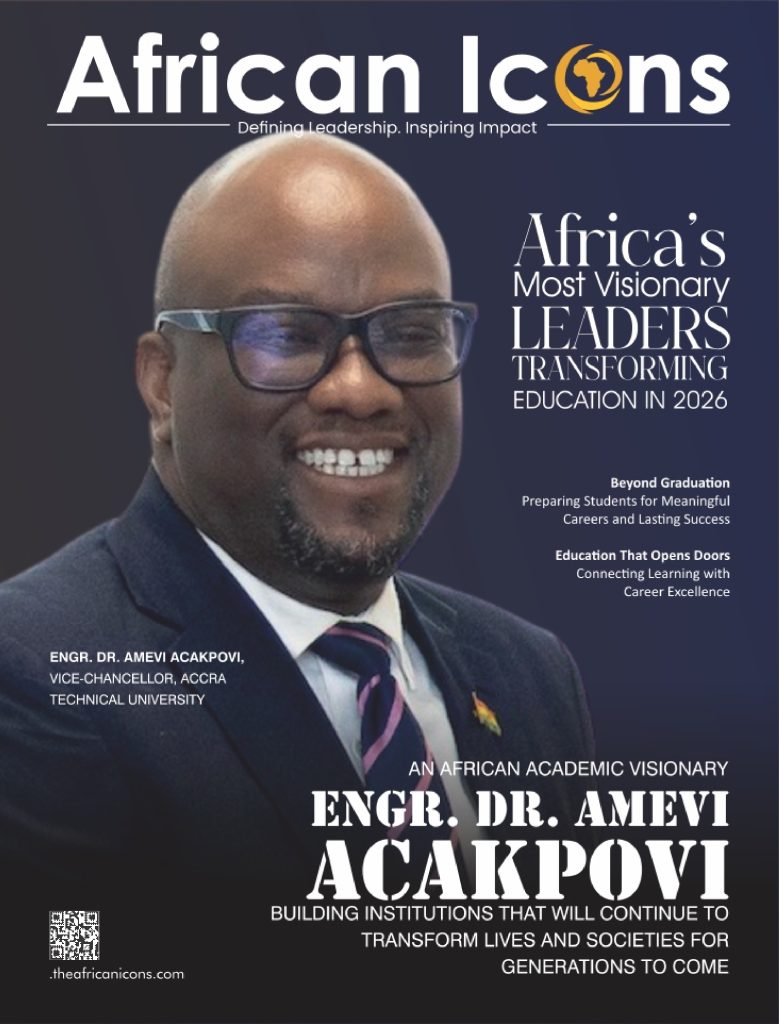
Accra Technical University (ATU) and its Vice-Chancellor, Prof. Engr. Dr. Amevi Acakpovi, have been featured in The African Icons’ 2026 editions celebrating prestigious universities driving student success and visionary leaders transforming education in Africa. The features highlight ATU’s commitment to industry-relevant education, emerging technologies, innovation and sustainability. Read the features: Africa’s Most Visionary Leaders Transforming Education in 2026 – Engr. Dr. Amevi Acakpovi Africa’s Most Visionary Leaders Transforming Education in 2026 – Engr. Dr. Amevi Acakpovi Follow and engage with the publications: Facebook – https://www.facebook.com/share/p/1C8JMs4bxF/ Instagram – https://www.instagram.com/p/DbsHVRwFfxZ/?img_index=1 LinkedIn – https://www.instagram.com/p/DbsY9mejUTA/?hl=en&img_index=1
NEW PARTNERSHIP CONNECTS ATU STUDENTS TO CALIFORNIA COMMUNITY COLLEGES
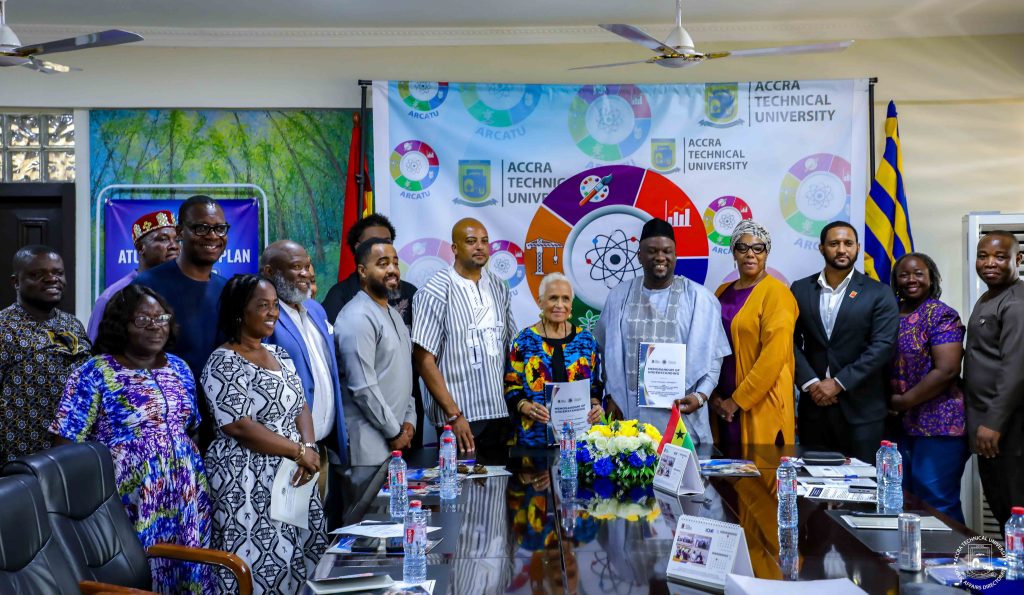
Accra Technical University (ATU) has signed a Memorandum of Understanding (MoU) with the California Community Colleges Chancellor’s Office and African American Male Education and Network Development (A2MEND) to expand international learning and academic opportunities for students. The partnership, signed on August 14, 2026, establishes a framework for the three institutions to collaborate through the Pan African Virtual College (PAVC), an initiative designed to connect students, faculty and institutions in Ghana and California through an Africa-centred approach to education. The partnership opens the door to opportunities including study abroad and student exchanges, virtual learning and exchanges, joint seminars and other academic programmes for ATU students. It will also promote curriculum development, faculty and staff exchanges, joint research and professional development. The initiative is expected to give students greater exposure to international learning while providing opportunities to acquire additional knowledge and skills relevant to the changing demands of the global workforce. Speaking at the signing ceremony, the Vice-Chancellor of ATU, Prof. Amevi Acakpovi, welcomed the partnership as another opportunity for Africans to acquire relevant skills and knowledge. He pledged the University’s full support towards making the collaboration successful and encouraged students to take advantage of the programmes that will emerge from the partnership, particularly opportunities that could enable them to acquire additional certification alongside their studies at ATU. Former President of the California Community Colleges Board of Governors and current Board member, Pamela Haynes, described the signing as a historic moment in the shared journey of the participating institutions. Drawing inspiration from the Akan concept of Sankofa, which means to “return and fetch it,” she presented the partnership as an opportunity for people of African descent to reconnect with their roots while drawing on the valuable lessons of the past to build the future. According to her, the partnership goes beyond academic cooperation. It represents an opportunity to strengthen an African-centred approach to education and deepen connections between Africa and its diaspora. She acknowledged the contribution of A2MEND, the California Community Colleges Chancellor’s Office and their Ghanaian partners towards bringing the Pan African Virtual College initiative to fruition. The President of A2MEND, Dr. Edward Bush, said the partnership advances the organisation’s mission of expanding access to international educational opportunities, particularly for Black students and Ghanaians, by addressing some of the barriers that have traditionally limited access. He said the initiative would help position students to acquire the knowledge and skills needed to address challenges within their communities and contribute meaningfully to development. According to him, programmes developed under the partnership will be relevant to the African context, research-centred and responsive to workforce needs, with areas such as climate change, artificial intelligence and cybersecurity among the fields to be explored. The Pro Vice-Chancellor of ATU, Professor Felix Kutsanedzie also welcomed the initiative, particularly the effort to make participation financially accessible to Ghanaian students. He noted that charging applicable fees in Ghanaian currency would be important in encouraging wider student participation. The MoU provides an umbrella framework for cooperation among ATU, the California Community Colleges Chancellor’s Office and A2MEND. Specific programmes, including exchanges, online courses, research activities and other academic opportunities, will be developed through subsequent implementation arrangements. The California Community Colleges Chancellor’s Office provides statewide leadership and coordination for the California Community Colleges system and supports initiatives in student success, innovation, collaboration and international partnerships. African American Male Education and Network Development (A2MEND) is a non-profit organisation made up of community college faculty and administrators who volunteer their scholarly and professional expertise to promote institutional change. The organisation has worked to improve educational outcomes for men of colour within the California Community Colleges system and, under the new partnership, serves as a strategic convener and implementation partner supporting educational opportunity, Pan-African collaboration and institutional partnerships. Access news gallery via the link below https://atudirectorateofpublicaffairs83.pixieset.com/newpartnershipconnectsatustudentstocaliforniacommunitycolleges
THE OPPORTUNITY WAS AT ATU. THE DESTINATION WAS GERMANY.

Godfryd Okuley’s journey shows how ATU’s international partnerships are creating pathways for students to learn, gain international exposure and build careers beyond Ghana. For students who dream of taking their skills beyond Ghana, opportunities can begin right here at Accra Technical University. Godfryd Okuley’s journey is another example of how ATU’s international collaborations are connecting students and graduates to opportunities beyond the classroom. An HND Mechanical Engineering graduate of ATU, Godfryd participated in a six-month German-language training programme organised by the University through its collaboration with BANOST Consult, AWA e.V. and DCG Halle International Institute gGmbH. The preparation was an important part of the journey. After completing the programme, Godfryd successfully passed his German-language examination at the Goethe-Institut, opening the way for the next stage of his international experience. In September 2025, he arrived in Germany. Today, he works as a Mechanical Engineer at Schmitz Feuerwehrtechnik, where he continues to build his professional skills and gain international industry experience. Godfryd’s journey highlights what ATU’s international partnerships seek to offer students: preparation, exposure and pathways to opportunities beyond Ghana. For current ATU students, his story is also a reminder to look beyond the lecture room and take seriously the international opportunities the University makes available. Your ATU journey could take you further than you imagine.
ATU FASHION DESIGN AND TEXTILE DEPARTMENT OPENS ANNUAL STUDENT EXHIBITION

The Department of Fashion and Textile Technology of Accra Technical University (ATU) has opened its annual student exhibition at the University Auditorium, beginning two days of fashion, creativity and student work. A ribbon-cutting ceremony officially opened the exhibition on Tuesday, 11 August 2026, with the Vice-Chancellor, Prof. Amevi Acakpovi, the Registrar, Dr. Janetta Sika Akoto, and the Head of the Department of Fashion and Textile Technology, Dr. (Mrs.) Emma Donkor, joining students and members of the University community for the opening. Dr. Donkor disclosed that 366 students will display their designs over the two days, giving visitors an opportunity to see the different ideas and pieces developed by students through their training. Prof. Acakpovi congratulated the students and thanked them for putting the skills and knowledge gained in the classroom to work in producing the designs on display. He encouraged them to continue developing their skills and making the most of the practical training offered by the University. The exhibition features a variety of student creations and provides a glimpse into the work taking place within the Department of Fashion and Textile Technology. From the choice of fabrics and construction of garments to finishing and presentation, visitors will get to see how students are turning what they learn into finished pieces. The exhibition continues on Wednesday, 12 August 2026, at the University Auditorium. Stay with us as we bring you more from the exhibition, the designs on display and the students behind them.
Dr. Janetta Sika Akoto Sworn In as Registrar of ATU
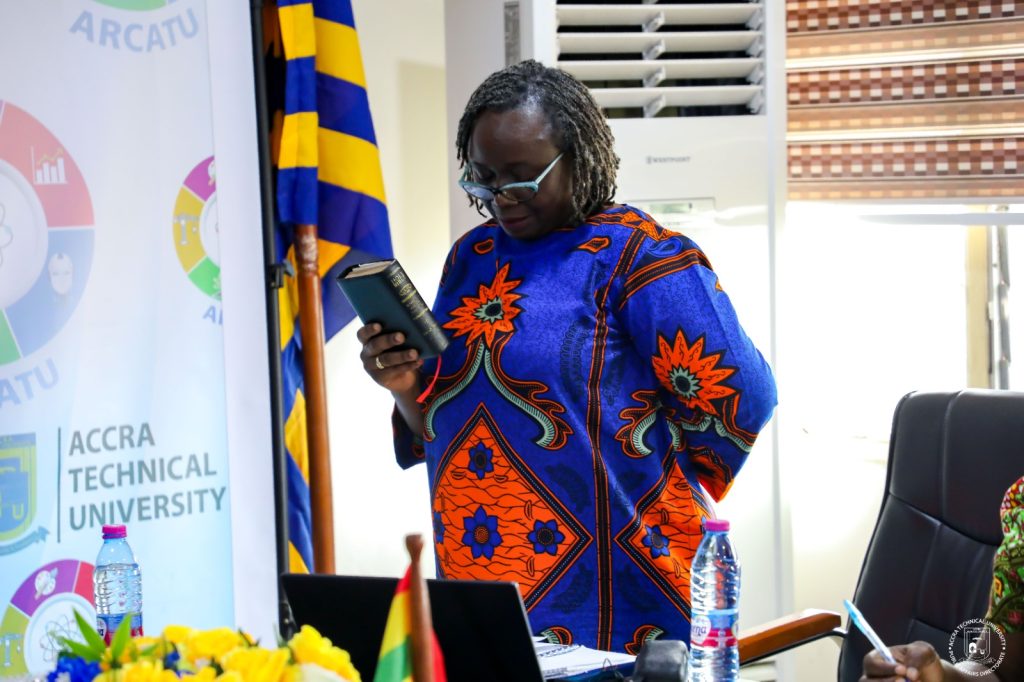
The newly appointed Registrar of Accra Technical University (ATU), Dr. Janetta Sika Akoto, has officially been sworn into office. The swearing-in ceremony took place on Wednesday, 12 August 2026, at the University’s Council Chamber, where Dr. Akoto took the official oath to begin her tenure as Registrar of the University. The ceremony was witnessed by members of the University Council. Her assumption of office brings to ATU many years of experience in university administration and management, gained from serving in senior positions across a number of Ghana’s public tertiary institutions. As Registrar of Accra Technical University (ATU), Dr. Akoto will serve as the University’s Chief Administrative Officer, working closely with the Vice-Chancellor, Management, and the various units of the University to support the effective administration and strategic development of ATU. Her swearing-in follows the earlier announcement of her appointment as the new Registrar of Accra Technical University. The University welcomed Dr. Akoto to the ATU community and wished her a successful and impactful tenure as she joins the University in advancing its vision and growth.
From ATU to Germany: How ATU’s Exchange Opportunity Changed Aurelius Fiadogbe’s Journey

One conversation at Accra Technical University opened a door that would eventually take Aurelius Kwaku Fiadogbe from an engineering classroom in Accra to technical training and ultimately a career in Germany. Today, Aurelius is an Electrical Technician in Altenburg, Germany. But his journey began at ATU, where an international collaboration offered Electrical and Mechanical Engineering students something beyond the traditional university experience: German-language preparation in Ghana, technical training in Germany and support throughout the transition. For Aurelius, who studied Electrical and Electronics Engineering at ATU, it was an opportunity he decided he could not allow to pass. In this student spotlight, he shares how the experience unfolded and why he believes other ATU students should embrace the international opportunities available to them. When did you first hear about the opportunity to go to Germany? Aurelius: I first heard about it while serving as SRC Vice President. The SRC President and I regularly met with the Vice-Chancellor, Prof. Amevi Acakpovi, to discuss student issues. During one of those conversations, he mentioned an upcoming collaboration that would give Electrical and Mechanical Engineering students the opportunity to learn German at ATU and later undertake technical training in Germany. As an Electrical Engineering student, that immediately caught my attention. I followed the development closely and was even present when the MoU was signed. I remember telling myself, “I have to be part of this, regardless of what it takes.” What happened after you decided to pursue it? Aurelius: When the German-language training started at ATU, I registered immediately. It wasn’t easy. Learning a completely new language was demanding, and there were moments of doubt and discouragement. But I trusted the process and kept going. I eventually completed the language programme, passed my German examination at the Goethe-Institut and travelled to Germany. Looking back, I am proud that I didn’t quit. What was the experience like when you arrived in Germany? Aurelius: The opportunity went beyond simply travelling abroad. I undertook intensive technical training in PLC and German Electrical Systems, which gave me practical exposure and allowed me to experience engineering and technical work in a different environment. But what impressed me most was the support throughout the journey. From documentation and accommodation to our arrival, orientation and transition, we were guided. We weren’t simply sent to Germany and left to figure things out ourselves. That support gave me confidence and peace of mind. Where has the journey taken you today? Aurelius: Today, I am working as an Electrical Technician in Altenburg, Germany. Beyond the technical skills, the experience has changed me personally. I am more confident, adaptable and open to different cultures. It has also strengthened my desire to continue learning and developing professionally. Sometimes I think back to that first conversation at ATU and realise how far one opportunity has brought me. What would you tell another ATU student considering an exchange or international programme? Aurelius: Take the opportunity seriously. Don’t allow fear, rumours or uncertainty to stop you. Trust the process, commit yourself and give it your best. There may be difficult moments, but those moments are also part of the preparation. For me, this programme didn’t just take me to Germany; it walked with me every step of the way. That is what makes it special. Aurelius’ journey reflects the possibilities that international partnerships can create when students are given the preparation and support to take advantage of them. Through collaborations with international partners, ATU is connecting academic and technical education with language development, international exposure and practical training opportunities beyond Ghana. For students considering the next opportunity, Aurelius story carries a simple message: the opportunity may open the door, but you have to be willing to walk through it.
ARCATU 2026 Launched to Advance Research, Innovation and Sustainable Development
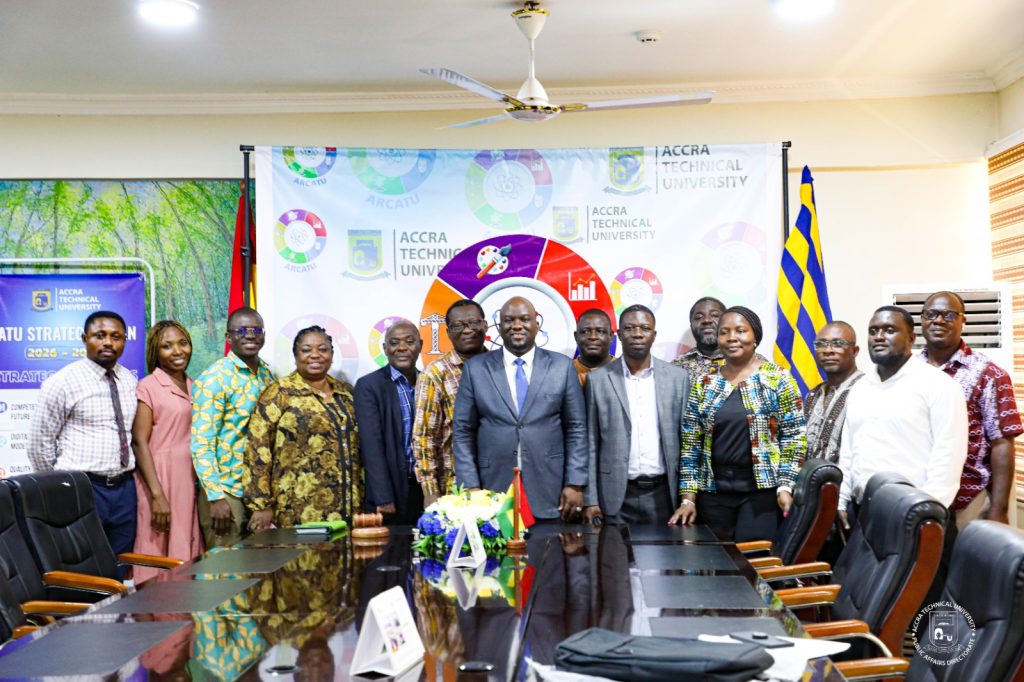
The 2nd Applied Research Conference of Accra Technical University (ARCATU 2026) has been successfully launched, setting the stage for researchers, students and industry professionals to explore how applied research and Artificial Intelligence (AI) can be used to address real development challenges. The virtual launch, held on Wednesday, August 12, 2026, at the University’s Council Chamber, introduced this year’s conference theme, “Applied Research and Innovation for Sustainable and Resilient Development in the Era of Artificial Intelligence (AI).” Delivering the keynote address, Professor Clinton Aigbavbova of the University of Johannesburg, South Africa, called for a shift from research that ends with publication to research that produces practical solutions and measurable impact. Professor Aigbavbova, Professor of Sustainable Human Development and Director of the CIDB Centre of Excellence and Sustainable Human Settlement and Construction Research, noted that Africa’s development challenges are increasingly connected and require solutions that bring research and emerging technologies together. He explained that applied research and AI can serve as complementary drivers of development. While applied research helps to clearly define problems and provide evidence, AI offers greater analytical, predictive and decision-making capabilities. For him, meaningful impact comes when knowledge and technology are combined and applied to real problems. Professor Aigbavbova also stressed the need for the responsible use of AI. He noted that while applied research and AI have become essential to development, technology must remain guided by human judgement, inclusion, human rights and the wider goal of improving people’s lives. He cautioned that AI could create new risks where proper governance and ethical safeguards are lacking. He welcomed the focus of ARCATU 2026, describing the theme as timely and relevant at a time when AI is rapidly changing research, industry and society. Vice-Chancellor of Accra Technical University, Professor Amevi Acakpovi, expressed excitement about the second edition of ARCATU and its focus on turning research into solutions that respond to society’s needs. He noted that research should go beyond generating knowledge to producing technologies, products, enterprises and policies that have practical value. With AI now influencing almost every sector, he said attention must shift from simply adopting the technology to finding ways of using AI and other emerging technologies to address challenges such as climate change, food security and sustainability while creating opportunities for people. Professor Acakpovi reiterated the University’s commitment to creating an environment where applied research and innovation can thrive. He described ARCATU as one of the platforms through which ATU is connecting research to practical solutions and encouraged researchers, students and industry professionals to use the conference to exchange knowledge, develop new ideas and build collaborations. The Applied Research Conference of Accra Technical University (ARCATU 2026) is the premier annual research event at Accra Technical University, bringing together academics, researchers, industry experts, and students to discuss cutting-edge innovations and sustainable solutions for the future. This year, ARCATU 2026 will take place from September 16-18, 2026, at Accra Technical University, Ghana. The conference will provide a multidisciplinary platform for researchers, students, industry professionals and other stakeholders to present research, innovations, prototypes, case studies and practical solutions.