
ATU has taken a decisive step toward translating its long-term vision into measurable results following a two-day Strategic Plan Implementation and Staff Capacity-Building Workshop held from April 8 to 9, 2026, at Labadi Beach Hotel.
The workshop, themed “From Vision to Action: Making the ATU 2026–2030 Strategy Work,” marked a critical transition from planning to execution, with a strong emphasis on performance, accountability, and institutional alignment.
Opening the session, Vice-Chancellor Prof. Amevi Acakpovi underscored the importance of collective responsibility, noting that the success of the Strategic Plan will depend on disciplined implementation across all levels of the University. His remarks set the tone for what participants described as a results-oriented engagement.
Day One focused on building a shared understanding of the Strategic Plan and aligning stakeholders with its key priorities. Presentations by academic leaders clarified strategic pillars, key performance indicators (KPIs), and flagship initiatives, providing a roadmap for departments and units.
Resource sessions led by Prof. Eric Nyarko Sampon and Prof. Ernest Owusu Ansah highlighted the critical role of institutional culture and leadership in driving success. They stressed the need to align behavior with strategy, break down departmental silos, and build a performance-driven environment supported by effective change management and conflict resolution systems.
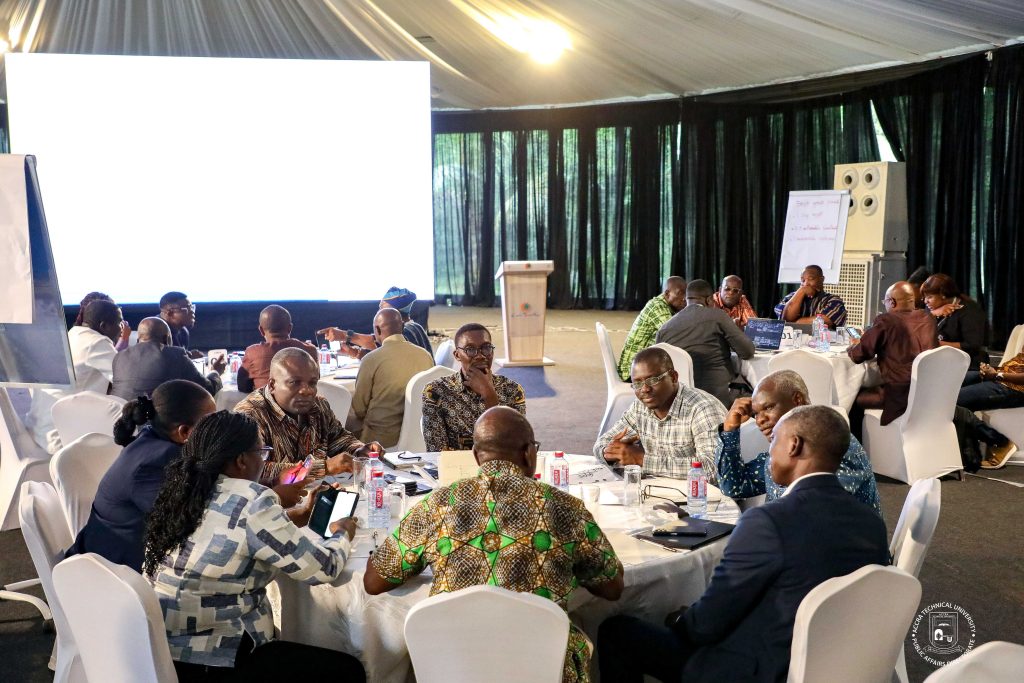
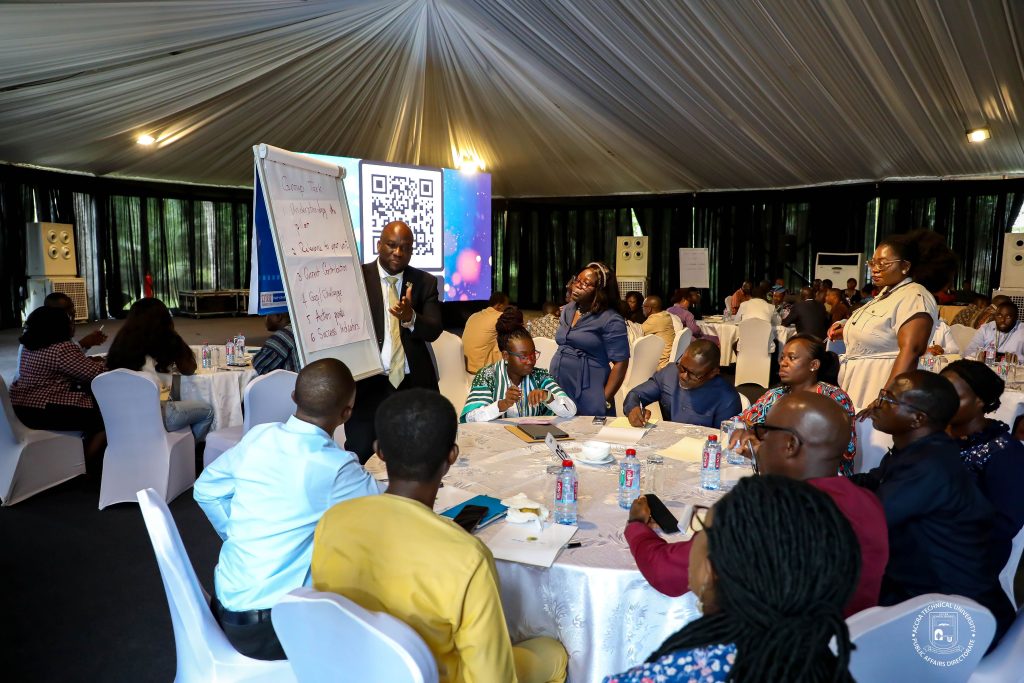
A standout feature of the first day was the interactive breakout session titled “Where Do We Fit?” where participants, working in cross-functional groups, assessed their roles within the Strategic Plan, identified gaps, and proposed actionable solutions. The exercise reinforced shared ownership and strengthened collaboration across departments.
Day Two shifted focus to operationalization, equipping participants with practical tools to translate strategy into action. Delivering a key session, Prof. Martin Morgan Tuuli outlined frameworks for aligning strategic objectives with annual work plans, budgets, and performance contracts, an approach aimed at closing the gap between ambition and execution.
In a session on monitoring and evaluation, Dr. Henry K. Hackman emphasised the importance of robust accountability systems, including KPIs, scorecards, digital tracking tools, and risk management mechanisms. Participants acknowledged that effective monitoring would be essential to sustaining progress and ensuring transparency.
The workshop also introduced innovative communication tools such as “scribe lines,” short, memorable phrases derived from the Strategic Plan to help maintain institutional focus and reinforce shared goals. Team-building activities facilitated by Prof. Peter Arhenful further strengthened collaboration, addressing a common challenge in large institutions’ fragmented operations. Participants engaged in exercises designed to build trust, improve communication, and encourage cross-departmental problem-solving.
A key outcome of the workshop was the departmental action planning session led by Dr. Peter Nyanor. Participants developed detailed implementation plans, outlining priorities for 2026, measurable targets, timelines, responsible persons, and resource requirements. This marked a clear shift from broad strategic intent to concrete, actionable steps.
Observations from the workshop indicated high levels of engagement and commitment among staff. Participants reported improved clarity on institutional priorities, stronger alignment between departmental roles and strategic objectives, and increased confidence in the University’s performance management systems.
The initiative reflects a broader trend within Ghana’s higher education sector toward adopting performance-driven and accountability-focused governance models. For ATU, however, the real challenge lies in sustaining momentum, ensuring continuous monitoring, and translating plans into tangible outcomes.
The workshop concluded with a renewed sense of purpose and a collective commitment to delivering results. As the University moves forward with its 2026–2030 Strategic Plan, stakeholders agree that coordinated effort, strong leadership, and a culture of accountability will be critical to achieving its long-term vision.